Why Data Centers Are Everywhere—and Where the Growth Is Headed Next
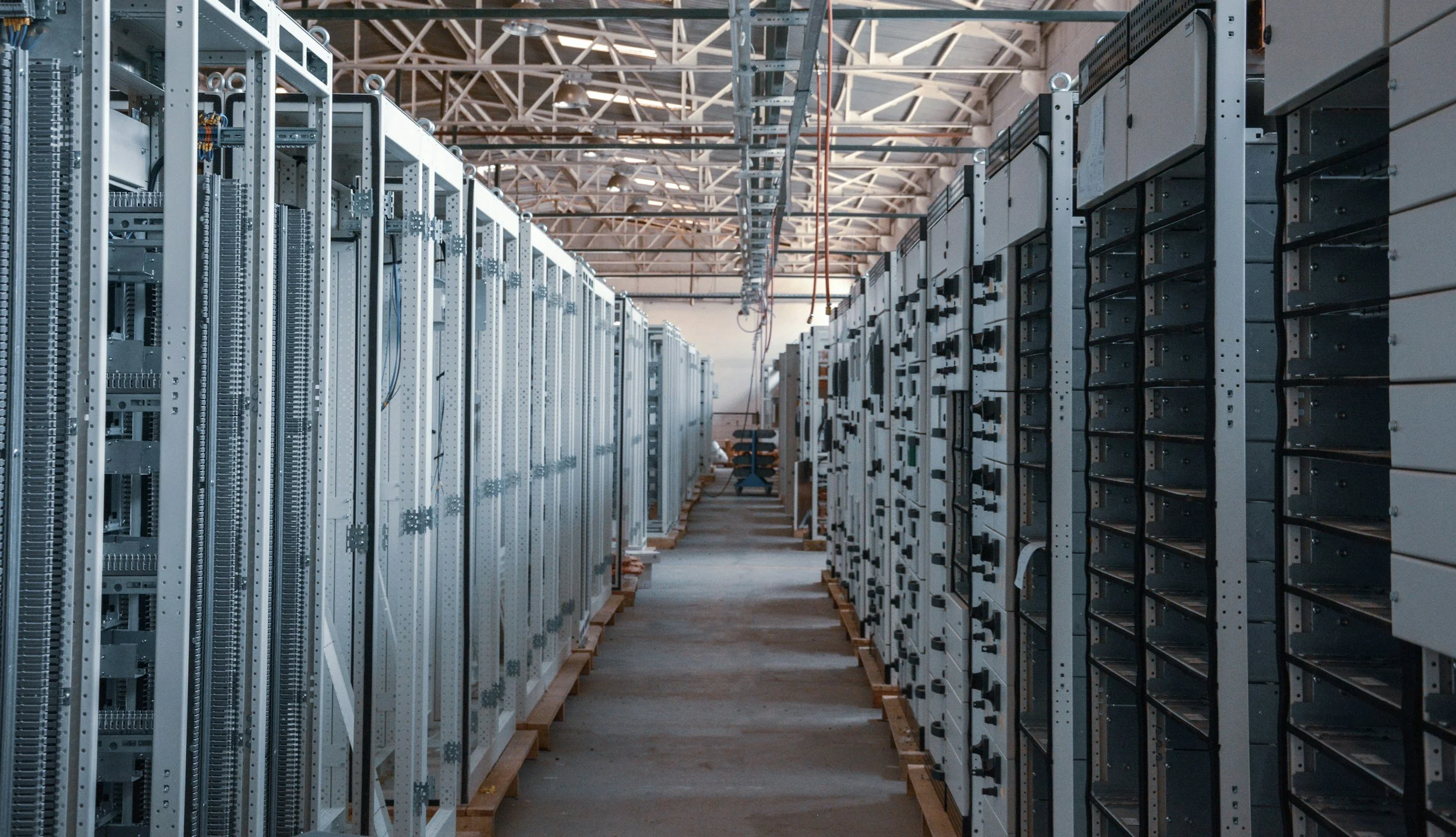
Drive through certain parts of Metro Atlanta today and you may notice a new type of development appearing alongside warehouses, subdivisions and industrial parks: massive data centers.
For many people, the sudden growth raises a reasonable question: Why are we building so many of them?
The answer is relatively simple. Nearly everything we do online has to physically exist somewhere.
Every cloud-based application, streamed movie, online purchase, digital photo, business platform and artificial intelligence request relies on physical computing infrastructure. Data centers are the buildings that house those servers, networking equipment and storage systems.
And as our demand for computing power grows, so does the need for the real estate and infrastructure behind it.
AI Is Accelerating an Already Growing Industry
Data centers aren't new. The internet, smartphones, streaming services and cloud computing have driven their expansion for years.
Artificial intelligence, however, has dramatically accelerated that demand.
AI requires enormous amounts of computing power. Training and operating increasingly sophisticated AI models requires thousands of specialized computer chips working together, often inside extremely large facilities.
At the same time, businesses continue moving information and software to the cloud, consumers are creating and storing more digital information, and virtually every industry is becoming more dependent on technology.
The result is an extraordinary need for additional computing infrastructure.
Why Atlanta?
Atlanta has emerged as one of North America's most important data center markets.
Its appeal isn't based on one factor. Georgia offers a combination of available land, major fiber networks, a strong business environment and access to significant electrical infrastructure. Atlanta is also one of the Southeast's primary economic and connectivity hubs.
That combination has attracted billions of dollars of investment from some of the world's largest technology and data infrastructure companies.
By the first half of 2026, Atlanta had approximately 2,882 megawatts of data center capacity under construction—more than any other major North American data center market.
That means what we're seeing today is likely only part of a much larger transformation already underway.
The Most Important Resource Isn't Land—It's Power
One of the biggest misconceptions about data centers is that companies simply need to find enough acreage.
Land matters, but power is increasingly determining where these projects can go.
Large data centers consume tremendous amounts of electricity. Some campuses require power comparable to that used by tens of thousands of homes.
That means future projects tend to gravitate toward locations where utilities can realistically provide large amounts of electricity—often near major transmission infrastructure, substations and planned power investments.
In many ways, this is creating a new development pattern.
For decades, growth largely followed highways, population and employment centers. Data centers add another major factor to that equation:
Growth is beginning to follow power.
Where Will the Next Wave Go?
As established areas become more developed and electrical capacity becomes constrained, data center companies are looking farther outside traditional urban centers.
That makes areas with large tracts of land, transmission infrastructure, fiber connectivity and access to major transportation corridors increasingly important.
In Georgia, that could mean continued expansion beyond Atlanta's traditional industrial centers and farther into surrounding counties where land is more readily available and new infrastructure can be built.
Rather than focusing exclusively on proximity to Downtown Atlanta, the next generation of projects may increasingly follow Georgia's electrical grid.
Watching where new substations, transmission improvements and major utility investments are being planned can provide important clues about where future growth may occur.
What Does This Mean for the Communities Around Them?
Data centers are different from many traditional developments.
They can represent extremely large capital investments and generate significant tax revenue while typically requiring fewer permanent employees than a similarly sized manufacturing or office development.
They can also bring major infrastructure investment into an area.
At the same time, communities are increasingly asking questions about power consumption, water usage, noise, visual impact and whether the benefits of these projects outweigh their infrastructure demands.
Those are important conversations—and they are likely to become more common as the industry expands.
The real impact of a data center also extends beyond the property where it is built. New electrical infrastructure, roads, fiber and utility investment can influence surrounding land and potentially change what becomes feasible in an area over time.
A New Kind of Growth
The buildings themselves may not always be particularly exciting from the outside. What they represent, however, is significant.
Data centers are the physical infrastructure behind an increasingly digital economy.
Just as railroads influenced where cities developed in the 1800s, highways reshaped growth in the 20th century and airports helped create modern economic centers, access to power and digital infrastructure may become one of the defining influences on development in the decades ahead.
Georgia—and Metro Atlanta in particular—is positioned directly in the middle of that shift.
The next time you see hundreds of acres being assembled, a new substation under construction or a large windowless building appearing along an industrial corridor, it may be part of something much larger.
The digital economy still requires physical real estate.
And increasingly, where the power goes, growth follows.
Wildmor Advisors
Understanding the forces shaping commercial real estate and development across Georgia.