Capital Investments - A higher return than your bank account

Capital investments into real estate are the one commonality that most millionaires add to their portfolio. This is smart and a proven path to creating wealth. Although investment in commercial property can be listed at a higher cost than residential real estate, there is equally a higher return on investment creating passive and stable cash flow. One of many benefits to being a landlord in commercial real estate is most maintenance responsibilities fall back onto the tenant, depending on the type of lease you buy into or establish. We will explore the many reasons why you might consider investing in commercial property.

Cash Flow and Income 

Investing in commercial real estate is returned twice; once in the present as monthly cash flow from rental income and again on the asset’s future appreciation. This is unlike other forms of investment, such as bonds that are valued only for their appreciation or stocks that return in a quarterly dividend. A stable and steady source of income is protected from the volatility of stock and bond investments because CRE does not trend the same as financial markets.

The amount of cash flow will depend on the type of rental property and the type of lease. The property can be an office or medical buildings, industrial lots, land, multifamily buildings such as apartments, retail, hotels or special purpose buildings like amusement parks. Different properties require different involvement from their landlord and dictate the level of cash flow the investor will receive. There are three types of leases, called net leases, that determine how involved the landlord must be with the management of the property. On a single net lease, also called an N lease, the tenant pays for their utilities and some property tax, but the landlord is in charge of all other financial and upkeep responsibilities. On a double net lease, or NN lease, the landlord maintains structural upkeep (land and buildings) but the tenant handles maintenance as well as tax and insurance on the property. The best type of lease a landlord can hope for is a triple net lease or NNN lease. With this lease, the tenant is solely responsible for everything regarding the property and the landlord is not involved with any maintenance or financial upkeep. This is the most beneficial lease because it has the highest income with the least involvement.

Appreciation of Assets

As mentioned above, an investment in commercial real estate returns on the potential future appreciation of the asset. This can be caused by an increase in demand in a central location, the higher the demand for property the more money people are willing to pay for it. Appreciation can also be due to improvements and maintenance done by the landlord. If a landlord renovates or improves aspects of the building, they are entitled to ask a higher rental price. Appreciation also happens during inflation; rents go up and that makes the value of the property increase too. CRE generates a higher total return and income than other real estate investments, stocks or bonds.

Long Term Lease

One of the reasons to invest in CRE is because of long term leases. Commercial properties that house businesses will average a three to a ten-year contract. This is unlike most residential leases that expire after a year and leave landlords to find new, reliable tenants on a recurring basis. Even if tenants try to break their lease early, there are still financial penalties tied to cancellations. Long-term leases are beneficial for both landlords and renters because a long-term lease creates a steady stream of income for landlords, without them having to search and do due diligence on new renters and renters have more ground to bargain for a better price per square foot.

Leverage 

When investing in commercial real estate, it is usually not purchased with 100% of the cash value upfront. A payment of 20-30% is made by the investors and the rest of the capital is from bank loans. Since CRE has been proven to be a valuable investment that has a greater return than other investments, banks are willing to provide loans. This allows investors to purchase real estate assets that are greater than their cash flow balance. When rent price increases and the value of the property goes up, the investor can resell the CRE asset for a larger sum of money. This means that the return on investment is greater than 100% and this is one of the main reasons to invest in CRE.

Tax Benefits

There are certain tax benefits to owning and investing in commercial real estate. Investors can claim tax deductions for depreciation of the asset and interest expense. The Tax Cuts and Jobs Act (TCJA) is a tax reform that brought new light to tax deferral strategies for CRE investors. It allows for properties bought between September 2017 and December 2022 to be eligible for bonus depreciation. Other tax benefits include loan interest write-offs, lower tax rates for passive activity, and a favorable long-term capital gains rate.

Tangible Asset

Another reason to invest in CRE is that ownership of a property is a hard asset. Both the property and the land it is on have financial value and can be used to create income. Remodeling of the property can further increase the value of the hard asset, making it an even better investment. Hard assets move in the opposite direction of stock markets so CRE can be a stable investment in an otherwise volatile investing market. Ownership of a tangible hard asset also feels good for the investors because it creates security.

Reasons to Invest in CRE

Commercial real estate is the most profitable of real estate investments with a proven track record of high returns. It is not subject to the whims of the stock market because real estate has a strong ever-growing demand. This, along with all the reasons listed above, makes it an attractive opportunity for every investor. 

Wildmor Advisors specializes in capital investment sales. We provide curated investment opportunities nationwide. We analyze each properties financial future ensuring that the juice is worth the squeeze. Contact us today to explore potential investment opportunities.

What Is Tenant Improvement Allowance? - How To Get The Best Bang For Your Buck

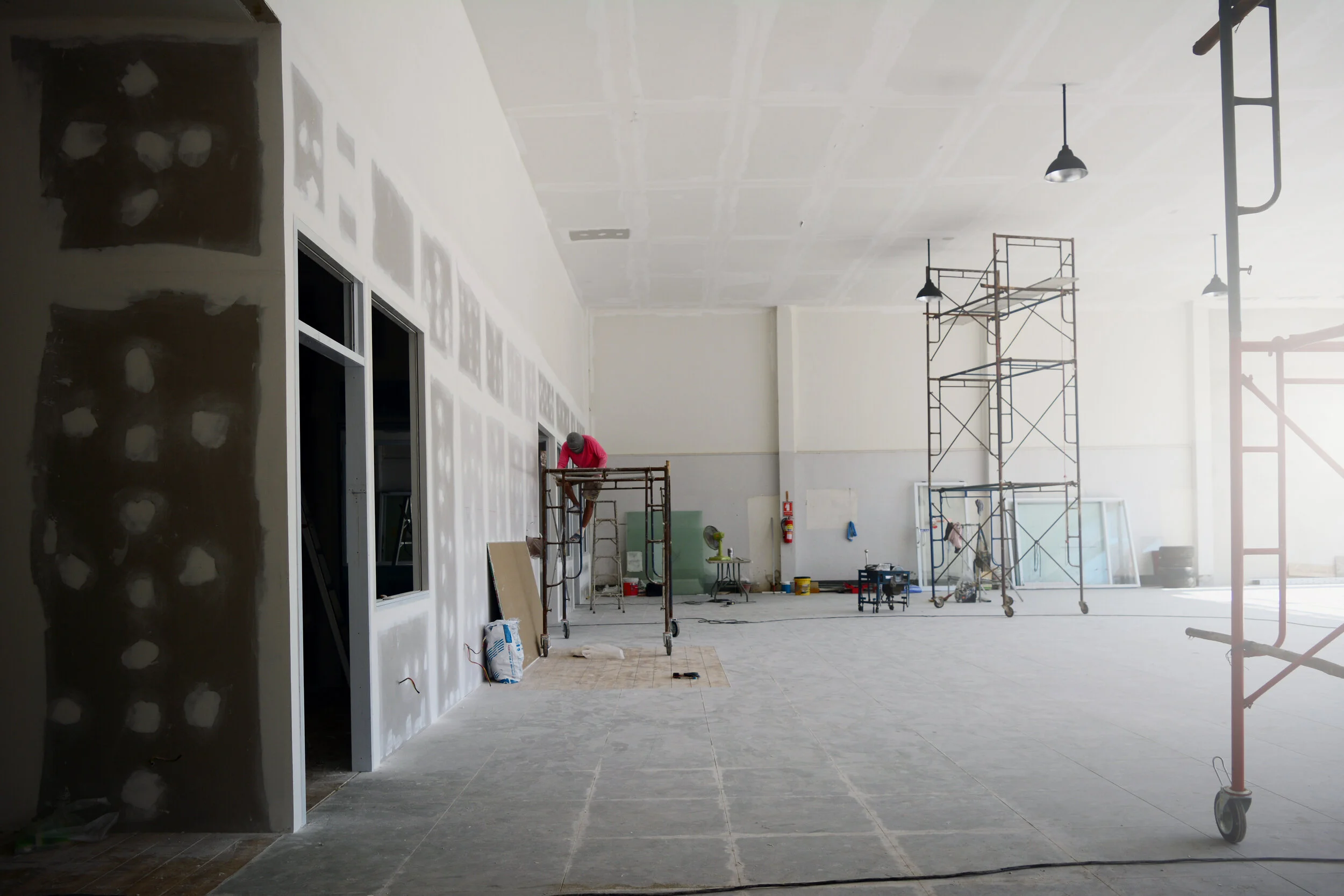
Most tenants looking to occupy a new space need some sort of build-out to accommodate their needs. This can include all industries such as office, industrial, and even retail. To make leasing a particular space more attractive, Landlords typically offer a “T.I. Allowance” to help sell you on signing a contract. So how can you use it best?

By minimizing your out-of-pocket expenses, a TI allowance can help you create a space that fulfills your particular requirements or preferences. With this information at your disposal, you can negotiate favorable terms with your landlord to create the best-customized space for your company.

How is TI allowance calculated?

Typically, a TI allowance is negotiated into the lease before signing and is expressed in either a dollar per square foot amount based on the size of the unit or a total dollar sum.

As an example, imagine that an owner agrees to a $35 per square foot TI allowance. In a commercial office space that is 12,000 square feet, that equals $420,000 in total. However, if the landlord bases their allowance on usable square footage and you have 11,000 usable square feet then your TI would only be $385,000.

Landlords typically offer a competitive TI allowance with corresponding rates from other buildings in the area. Surprisingly, the landlord may also take into consideration, who the tenant is, their credit, and their history as a tenant.

What Does a Tenant Improvement Allowance Cover?

Owners are more likely to prefer that a TI allowance covers basic construction costs, whereas tenants generally try to expand it to cover additional costs including permit fees, legal fees, architectural fees, and labor. Again, the specifics of what is covered should be negotiated as part of your lease agreement.

Keep in mind that costs related to moving fees, internet, cabling setups, and décor and furniture are not usually included in the TI allowance.

Sometimes, you can negotiate that if your project is completed under budget, any remaining funds can be applied to either future improvements or some other use associated with the lease, such as free rent.

How To Get The best bang for your buck?

It is important to get an accurate build-out cost so you can evaluate your out-of-pocket expenses that may go beyond your TI allowance. At Wildmor Advisors, we always negotiate the best commercial real estate deal for your goals by running predictive analytics giving you an idea of the total cost of your project for the length of your lease. We then keep your goals top of mind and go back to the landlord for negotiations.

Our best advice to you is to work with a team like ourselves, who specializes in tenant representation. Don’t leave money on the table by not having an advocate by your side!

Commercial Construction: Expect An Increase In Cost and Delays


The Issue: 

Building material costs have been escalating and delivery timelines are being pushed out as the supply-chain shortages and delays continue to ripple across the world. Whether you are reshaping your commercial space, completing a full build-out, or building a new commercial development, misreading the global supply chain issue can add unnecessary costs and delays to your project. 

What To Watch: 

Increased Costs 

Steel is one of the most common building materials in Commerical Real Estate. Approximately 16% of a building’s costs are related to steel. This year steel has seen a 300% increase in price and a 40-week delivery timeline

In addition to steel, insulation material prices are up 20%, lumber prices have seen a 400% increase, plumbing supplies saw a 175% jump in mid-April, and electrical material prices have all spiked. 

Delays   

From pandemic shutdowns to extreme weather, to labor shortages it’s taking much longer for materials to get to job sites. In 2021 we have seen the delivery timeline for steel joints increase from 14 weeks to 40 weeks, and fiberglass delivery taking up to 10 weeks

According to HITT’s 2021 Mid-Year Construction Materials Pricing Report, everything from roofing to plumbing is seeing an increase in lead time. They also expect these disruptions to continue in the coming months 

Why It Matters: 

Unanticipated delays and increases in project cost require more flexibility than the commercial construction industry has ever experienced before. If your construction project will be funded by a Tenant Improvement Allowance it will be important to get the project pricing upfront and define all your project costs prior to landlord negotiations in order to address any potential delays in the lease language. Once the TI has been allocated, it will be the tenant’s responsibility to cover any costs not covered by the allowance.  

For our clients that have been looking to purchase an industrial or office building, you should be aware that if there has been an increase in pricing for building materials it has already been factored into the cost.

The Hollywood of the South - Georgia’s Growing Film and Entertainment Industry

AdobeStock_268787786.jpeg

According to the state film office, Georgia currently has 2.1 million square feet of stage space and 3.2 million square feet of retrofitted stage space and warehouse space. The film and entertainment industries are booming in Georgia setting a blockbuster record of $4 Billion in direct spending on productions for the 2021 fiscal year. And the demand for production space in Georgia is only getting bigger. 

Reasons why Georgia is an attractive state for the Film and Entertainment Industry: 

  • Georgia has great tax incentives

  • Georgia has many diverse  locations 

  • The number of sound stages 

  • The abundance of talent 

Production facilities that are expanding in the Atlanta Metro Area: 

  • Trilith Studios (formerly Pinewood Studios) in Fayette County

    • Trilith Studios is set to add 220,000 plus square feet of new space to its current 700-acre campus including a creative office center and 60,000 SF of “smart stages”. 

  • Commonwealth Group (formerly Blackhall Studios) in DeKalb County

    • Blackhall Studios is planning a 155-acre, $250 million expansion that will deliver over a half-million square feet of new filming space with additional warehouse, office, and catering spaces 

  • Gray Television (who purchased Third Rail Studios) In DeKalb County 

    • Gray Television is set to start its “Studio City” mixed-use development in the spring of 2022. Studio City will have 10 TV and movie studio spaces totaling more than 550,000 SF of production space, a state-of-the-art interactive city, apartments, townhomes, hotels, and restaurants. 

  • Tyler Perry Studios in Fulton County 

    • Tyler Perry Studios is expanding its Atlanta production studio by 37.5 acres. The additional space will be open to the public including a theater district, retail stores, and restaurants 


There is no doubt that the movie production industry is driving growth in Georgia and in commercial real estate. At Wildmor Advisors, we do more than office and industrial space. We have extensive experience and expertise in an array of industries and commercial real estate spaces and are here to answer your questions and guide you through what a mixed-use development would look like. 


A Workplace For Employee Experience


Employee experience has emerged as a key strategy for employers to stay competitive with retaining and attracting top talent in the post-pandemic world. 94% of employers say they are going to prioritize enhancements to the employee experience over the next three years. This comes as no surprise as research has found that companies with an engaged workforce are 21% more profitable. And, employee disengagement costs the U.S. economy $450-$550 Billion every year

The employee experience begins from the very first interaction an employee has with a company, often during the interview process. According to Jacob Morgan, researcher, and author, the employee experience is based on three factors: the physical environment, technology, and culture. 

In today’s distributed workplace, business leaders are finding it difficult to keep employees engaged as company culture is tested and employee’s needs for a physical work environment shift. While the office still plays a major role in employee experience, business leaders need to re-evaluate its purpose. Knowing what your employees need and expect from their office is key in finding and designing an optimal workplace. 

What do business leaders need to know about their employees to find and design the optimal workplace? 

  • The expected amenities 

Do your employees expect an on-site gym, dog-friendly campus, cafeteria, or child care center? Amenities are a large part of an employee’s workplace experience and knowing the difference between the must-haves and the nice-to-haves will help narrow down your options and keep your office search on track and employee experience top of mind. 

  • Creating a supportive environment 

Employees need to feel engaged and supported in their work environment. Knowing what kind of space your employees need to feel supported is key to space design and optimization. Do your employees need quiet space, collaborative space, or frequent interaction space? In hybrid work models, for example, work might happen at home, but the physical office space needs to be designed to support collaboration and interaction. 

  • Empowered Workplace 

Once employees' workplace needs and preferences are known, the physical office space design can be tailored to them. By providing employees with the resources they need to do their work well you’re creating a more empowered workplace with a better employee experience. 

At Wildmor Advisors, we believe in people-centric workplaces and are here to help you find and implement a workplace that optimizes your employee’s experience.