Why are tech companies still banking on campuses?

 
AdobeStock_360454190_Editorial_Use_Only.jpeg
 

Earlier this month Amazon announced that it will soften its back-to-the-office stance and allow employees to work remotely two days a week. Apple, an office-centric company like Amazon, has also recognized the need for flexibility. Why are these tech giants who have built billion-dollar campuses backing off their mandatory return to the office plans? It all comes down to attracting and retaining top talent. 

Recruiting top talent for tech companies has always been competitive and now flexibility for a work-life balance is a must. This leads us to another question. If tech companies are embracing more remote work, why are they continuing to invest millions of dollars into their campuses? For example, last September (in the midst of the pandemic) Facebook purchased a $390 million campus in Washington. In addition, tech giant Oracle is moving forward with its $1.2 billion campus in Nashville. 

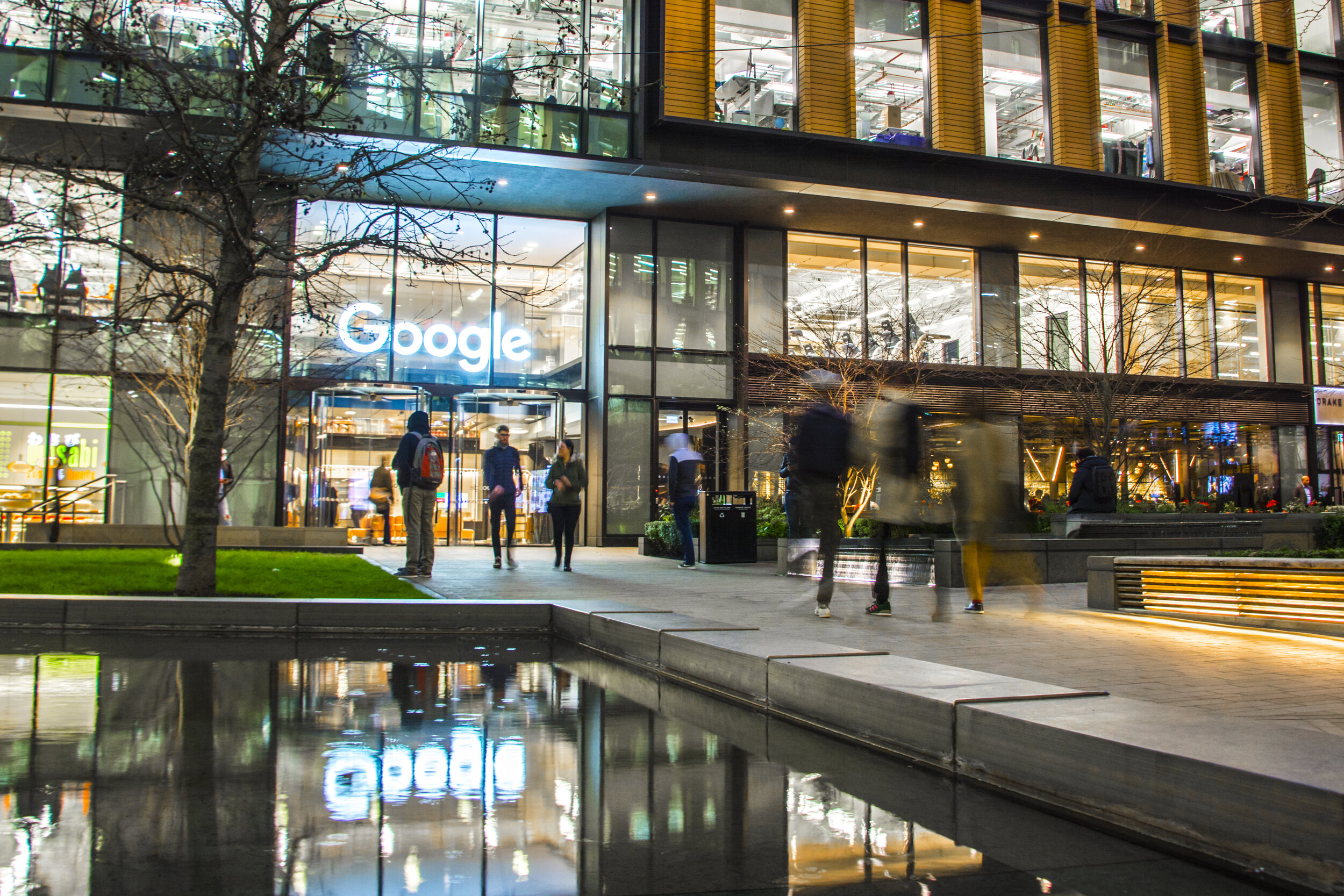
In an earnings call earlier this month, Ruth Porat, the chief financial officer of Google’s parent company, Alphabet, said that spending on building and upgrading offices would be “normalized” in 2021. “We believe that in-office collaboration will be just as important to Google’s future as it’s been to our past,” CEO Sundar Pichai wrote in a recent email to staff. 

So why are tech companies still banking on campuses? 

  1. In-person collaboration is important

  2. Top-tier talent is attracted to the perks 

Furthermore, to compete for top-tier talent companies (including large tech giants) are moving away from office-centric cultures to worker-centric cultures that focus on wellness and work-life balance. In-person collaboration space is still imperative for companies and is at the center of the “is the office dead debate”. For recruitment and retention of top talent, companies need to provide employees with flexibility, but for collaboration, companies need agile space that fosters employee impact.  

Forward-thinking companies understand the future of work is here.  At Wildmor Advisors, we know the importance of connecting companies to flexible, digital, sustainable, and most importantly worker-centric workspaces.


The Impact of the Global Supply-Chain crisis on Commercial Real Estate

 
pexels-tom-fisk-3057960.jpg
 

Among the far-reaching impacts of the Covid-19 pandemic is a supply-chain crisis that has resulted in severe disruptions in the availability of both commodities and raw materials.  Manufacturing plants ranging from automotive, household appliances, recreational vehicles to home goods and electronics have been forced into temporary shutdowns while raw materials are delayed.  Manufacturers are resorting to air-shipments of materials, at a substantial premium in shipping costs, in order to simply keep production lines going.  A sample of the surging commodity market increases are listed below: 

  • Lumber: +265%

  • WTI Crude: +210%

  • Gasoline: +182%

  • Brent Crude +163%

  • Steel +161%

  • Heating Oil: +107%

  • Corn: +84%

  • Copper: +83%

  • Soybeans: +72%

  • Silver: +65%

  • Sugar: +59%

  • Cotton: +54%

  • Platinum: +52%

  • Natural Gas: +43%

  • Palladium: +32%

  • Wheat: +19%

  • Coffee: +13%

  • Gold: +3%

The Direct Impact On Commercial Real Estate 

  • Building construction prices have substantially increased

    • These increases have been partially offset by lower labor costs due to the drop in demand for projects through the pandemic however, the activity is picking back up and that offset will likely disappear.  

  • Developers will be much less likely to build projects on a speculative basis

    • With the strong demand for industrial space, the commodity price increases will be easier to pass along and will drive increases in rents across the board.  

  • The office, where the timetable to return is still nebulous and the impact on the demand will take a couple of years to determine

    • Many projects will be tabled while the equilibrium is settling in.

  • Retail properties are being repurposed or repositioned to incorporate more experiential tenants

    • The cost to build new has substantially increased and challenges the feasibility of projects across all sectors, at least until rates stabilize to support the higher construction costs

The Indirect Impact On Commercial Real Estate 

  • The rapid acceleration to the shift to e-retailers

    • Amazon, Walmart, Instacart, and many others have taken large blocks of industrial space to accommodate the surge in demand for online retailing.  By some estimates, Amazon is responsible for almost half of the industrial absorption over the last year in the large metropolitan markets.

  • Many manufacturers are reevaluating their inventory systems and are planning to increase their inventories to minimize supply-chain risks

    • Some of these shifts will be temporary but others may opt to be less dependent on just-in-time inventory management. Manufacturers are also redesigning the supply chains to minimize the disruption of products from any single market in order to build a more resilient supply chain. As inventory stockpiles increase, manufacturers will require more square footage in their warehouses to store the raw materials. This will result in a surge in expansion projects and manufacturers relocating to larger facilities.  

    • IIOT (Industrial Internet Of Things) has proven to have huge productivity, cost savings, and safety improvements on the industrial and manufacturing supply chain. The improvements in inventory management, product design, and quality controls are giving clear insight into how much space is needed and how to best use warehouse space. 

A Happy Workplace: A True Driver of Employee Productivity

 
pexels-alexander-suhorucov-6457579.jpg
 

Did you know that workers who are in a happy mood are about 13 percent more productive

The employer/employee relationship is becoming more complex as it goes beyond basic benefits packages and companies look to take responsibility for supporting employees’ emotional stability. In fact, a 2021 study by Wellable reported that 88% of employers are investing in mental health programs. 81% of those companies are investing in stress management and resilience and 69% are investing in mindfulness and meditation. 

While it’s not a guarantee that providing one or most of the emotional stability programs will help move the needle for employee morale and happiness towards the company it is a good start; but also might be a band-aid solution for deeper rooted issues. To avoid “putting a plaster” on employee happiness the key is to truly know what makes your employees happy. 

What Makes A Happy Workplace? 

While many employers might say pay is at the top of what makes employees happy, it actually falls more towards the middle. A study conducted by Indeed.com of over 5 Million workers found that the drivers of happiness have slightly changed in the U.S. since the onset of COVID-19. The workplace happiness drivers are as follow: 

  1. Feeling a sense of belonging

  2. Having workplace flexibility 

  3. Feeling respected in an inclusive environment 

  4. Having a clear purpose 

  5. Paid fairly 

  6. Feeling Supported 

  7. Trust colleagues 

  8. Opportunities to learn 

The Happier Way Forward 

In addition to a more productive workforce, investing to make a happier workplace can create a competitive edge for companies. Happiness multiplies in nature and can spread across a company encouraging employees to more pride in their work. While we are not mental health specialists, we are workplace specialists that pride ourselves on your productivity per square foot ™ and we are here to help and advise you on your workplace needs every step of the way. 

When you head back into the office is your four-legged coworker coming with you?

 
AdobeStock_212600796.jpeg
 

In 2020 pet sales soared and animal shelters across the U.S. were nearly empty as people sheltered in place amid the coronavirus pandemic. Now, after spending a year with their “quarantine pets” remote employees and companies are looking at the possibility of returning to the office with their four-legged coworkers by their side. About 60% of executives are considering pet-friendly policies and 42% of executives believe that a progressive pet policy will coax employees back into the office. 

Reasons why companies are considering pro-pet policies 

  •  Potentially get employees back into the office sooner 

  • Attract top talent that are pet owners 

  • Keep employees more active 

  •   Increase productivity and  contentment among employees 

  •  Expand creativity, resulting in less stress  and more exercise 

Of course with all “pro” lists there is also a “con” list. Pet-friendly offices will only work if the pets are friendly to the people and the other pets in the office. Pets in the office can also be distractions, messy, and noisy. Needless to say, companies that are considering a pet-friendly office should put together thorough guidelines for employees who bring along their four-legged coworkers. 

What do you mean I might not be able to bring my dog into the office? 

As companies look to expand their pet policies, they should also check to make sure their building is pet-friendly before giving their employees the green light to bring in four-legged coworkers. While there are many office buildings that are pet-friendly, most class A multi-tenant office spaces aren’t. 

What are landlords saying about pets in the office? 

What we have discovered with many office landlords in the Atlanta area, is that pets aren't so much allowed as they are tolerated. 

Jennifer Koontz the Managing Director of Leasing and Advisory Services at Pope & Land Real Estate oversees the leasing of over 1.7 million square feet of office space in the surrounding Atlanta area. Koontz stated that: "Typically we do not allow pets in the buildings, though we have one building that we have allowed small dogs with very strict guidelines.  (In this case, this was a major negotiation point that allowed us to sign the lease with a major tenant, at the height of the recession). However, I would not consider this a pet-friendly building since no one else is allowed to bring pets to the office. We have another building that we purchased and it previously allowed dogs, so we needed to adopt a “Don’t ask, Don’t tell policy, where we look the other way when people bring them in."  

Alexis Easterling, an Associate at JLL, represents about 2 million square feet of office space in the Atlanta area. Easterling stated that: “Most buildings I work on are not pet-friendly inside the building’s premises. However, I just recently started working with a flexible offering partner, WeWork, and most of their spaces are pet-friendly, pending that the building they are operating in allows for this use.

 I think pet policies are heavily weighted towards what image or user the Landlord is targeting for their asset(s). There’s a large difference in sophisticated, professional service users wanting an upscale feel versus start-ups that attract young, creative talent in a more relaxed environment.``

The Bottomline

Amid the mental health and burnout crisis companies are currently facing, making every day “bring your pet to work day” can improve morale, reduce stress, prompt creativity, and so much more. Implementing guidelines and receiving permission from your landlord is advised to mitigate any issues when expanding an office pet policy. 

If you’re in the market for pet-friendly office space, we would love to help you find the perfect place. Wildmor, is your business in the right PAWlace?

The Future of The 1031 Exchange Program and What That Means For Your Commercial Real Estate Investments

 
Blog image Template copy.jpg
 

Unlike the stock market where many factors are out of your control (you can lose all your money overnight), investing in commercial real estate allows you to build wealth over time and offers many tax benefits. We have helped many clients with their building acquisitions and dispositions, all while guiding them on how they can optimize tax benefits that come along with their investment. While there are many tax benefits for investing in real estate, perhaps none of them are more valuable than the 1031 Exchange Program. 

Since President Joe Biden has announced that he plans on eliminating the 1031 Exchange Program for investors whose annual income exceeds $400,000, those that are seeking to make commercial real estate investments in the future will be largely affected. 

What is the 1031 Exchange Program: The 1031 Exchange Program allows you to defer your capital gain taxes when you swap one investment property for another. The IRS code section 1031 has many rules and limits that an investor needs to be aware of, but the 1031 Exchange Program has ultimately been considered a huge tax benefit for real estate investors as they grow their portfolios. 

Why it matters: If the 1031 Exchange Program is eliminated, capital gains tax will nearly double for investors that are in the top tax bracket (39.7%). Investors who are worried about the large tax hike will think twice before selling their properties and the supply on the market will shrink. In addition, there will be little incentive for investors to put their proceeds towards larger real estate investments. 


What we are advising: There is still a chance that the 1031 Exchange Program will not be eliminated, but if it is, you should be aware that real estate is an allowed investment inside retirement accounts and is an ideal option for tax deferment on real estate investments. Both IRA’s (Individual Retirement Accounts) and 401(k) plans allow any rental income to grow tax-deferred and can be re-invested. However, there are times when using a retirement account is not appropriate for making a real estate investment, and using cash will be more beneficial. 


Key takeaway: While the 1031 Exchange Program hasn’t been eliminated by President Joe Biden yet, it is important to know your options when looking to make an investment in commercial real estate. At Wildmor Advisors, we are not experts in tax law, but we are experts in commercial real estate and we are here to help answer any questions you have on any current or future investments you plan to make.



