Consumer Spending in 2026: What It Means for Commercial Real Estate

Consumer spending remains one of the most important forces shaping the U.S. economy—and in 2026, the way consumers are spending may be just as important as how much they are spending.
Despite continued concerns surrounding inflation, interest rates and economic uncertainty, Americans have continued to spend. The Congressional Budget Office projects real consumer spending to increase approximately 1.8% in 2026. More recent data shows continued growth as well, with U.S. personal consumption expenditures increasing in both June and July.
But beneath those numbers is a consumer who has become increasingly selective.
That shift has important implications not only for retailers, but also for companies occupying office space and the commercial real estate decisions they make.
Consumers Are Still Spending—But More Intentionally
According to the U.S. Census Bureau, retail and food service sales in July 2026 were approximately $763.6 billion, 5.0% higher than July 2025. At the same time, July sales declined 0.6% from the previous month, illustrating some of the month-to-month volatility businesses continue to face.
The Atlanta Federal Reserve has also reported a noticeable “flight to value,” with consumers increasingly favoring value-oriented purchases while luxury dining and experiences have remained relatively resilient. Restaurants have reported consumers spending less per visit even as traffic has remained relatively steady.
In other words, the consumer has not disappeared. They have become more discerning.
For businesses, that distinction matters.
What This Means for Retail Real Estate
Consumer spending ultimately helps determine which retailers expand, which locations perform and how much rent a business can realistically support.
In an environment where customers are more selective, simply being in a growing market may not be enough. Retailers have to evaluate who the customer is, how frequently they visit, what they are willing to spend and whether a particular location makes financial sense for the business.
This can make site selection increasingly important.
A retailer may benefit more from a smaller, highly visible location near the right customer base than from a larger space with weaker traffic. Restaurants may place greater emphasis on access, parking and surrounding daytime population. Service-oriented businesses may prioritize proximity to rooftops and household growth rather than traditional retail traffic alone.
The real estate has to support the business model—not the other way around.
Interestingly, retail real estate itself has remained relatively resilient. NAR reported retail vacancy of approximately 4.3% in July, with general retail continuing to lead absorption.
That creates an interesting dynamic: consumers may be more price-conscious, but well-positioned retail space can still be competitive.
Consumer Spending Matters to Office Tenants, Too
The connection between consumer spending and office real estate may be less obvious, but it is equally important.
Businesses ultimately lease office space based on expectations for revenue, employment and future growth. When customers become cautious, companies often become cautious as well.
That can influence decisions such as:
Whether to expand or consolidate
How much square footage to lease
Whether to renew or relocate
How much capital to invest in a new office
Whether to commit to a longer lease term
Which amenities are actually worth paying for
For companies directly tied to consumer demand—marketing firms, financial services companies, professional services firms, technology companies and corporate headquarters among them—changes in customer spending can eventually affect hiring and space requirements.
The 2026 office market is already reflecting a more selective environment. NAR reports that office demand continues to stabilize, but improvement has been concentrated heavily in Class A properties while Class B and C buildings remain under greater pressure.
The Atlanta Federal Reserve has observed a similar trend across the Southeast, reporting that demand has outpaced supply for Class A office space as companies continue a broader “flight to quality.”
Companies may be cautious about taking more space, but many are willing to pay for better space.
Real Estate Decisions Should Follow the Business
One of the biggest mistakes a company can make is evaluating commercial real estate independently from its broader business strategy.
A retail lease is not simply a question of rent per square foot. An office renewal is not simply a question of whether the landlord will offer a lower rate.
Occupancy costs have to be evaluated against revenue, workforce needs, customer behavior, future growth and the alternatives available in the market.
For a retailer, paying a higher rent in the right location may produce significantly better results than choosing a less expensive location with weaker demographics or visibility.
For an office tenant, relocating to a higher-quality building could potentially improve recruitment, retention and employee utilization—even if the rental rate is higher. Conversely, a company experiencing slower growth may benefit from reducing its footprint, restructuring its lease or negotiating greater flexibility.
That is where commercial real estate strategy becomes more than finding available space.
Looking Ahead
Consumer spending in 2026 is not necessarily signaling that businesses should stop expanding. Instead, it is reinforcing the importance of being strategic.
Consumers are still spending. Businesses are still growing. Retailers are still opening locations, and companies are still signing office leases.
But both consumers and businesses are becoming more selective about where their money goes.
For commercial tenants, that makes understanding the market, negotiating the right lease structure and selecting space that supports the company's long-term objectives increasingly important.
At Wildmor Advisors, we help businesses evaluate their real estate from the tenant's perspective—considering not just the space itself, but how each decision impacts operating costs, flexibility and long-term business goals.
Whether you are evaluating a new location, approaching a lease renewal or reconsidering your current footprint, having the right market information can help turn real estate from a fixed expense into a strategic business decision.
Wildmor Advisors
Tenant Representation | Commercial Real Estate Advisory
Why Data Centers Are Everywhere—and Where the Growth Is Headed Next
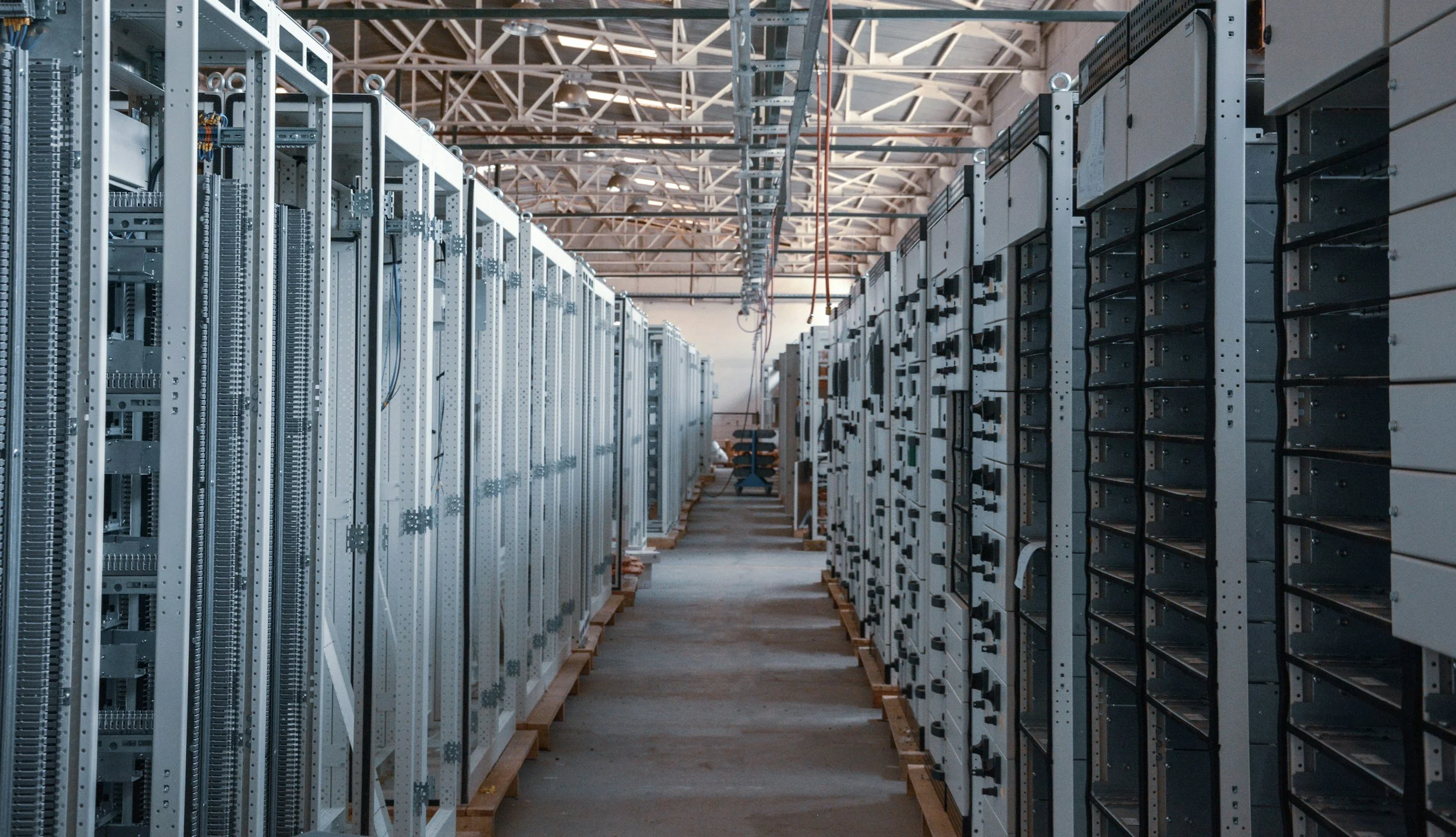
Drive through certain parts of Metro Atlanta today and you may notice a new type of development appearing alongside warehouses, subdivisions and industrial parks: massive data centers.
For many people, the sudden growth raises a reasonable question: Why are we building so many of them?
The answer is relatively simple. Nearly everything we do online has to physically exist somewhere.
Every cloud-based application, streamed movie, online purchase, digital photo, business platform and artificial intelligence request relies on physical computing infrastructure. Data centers are the buildings that house those servers, networking equipment and storage systems.
And as our demand for computing power grows, so does the need for the real estate and infrastructure behind it.
AI Is Accelerating an Already Growing Industry
Data centers aren't new. The internet, smartphones, streaming services and cloud computing have driven their expansion for years.
Artificial intelligence, however, has dramatically accelerated that demand.
AI requires enormous amounts of computing power. Training and operating increasingly sophisticated AI models requires thousands of specialized computer chips working together, often inside extremely large facilities.
At the same time, businesses continue moving information and software to the cloud, consumers are creating and storing more digital information, and virtually every industry is becoming more dependent on technology.
The result is an extraordinary need for additional computing infrastructure.
Why Atlanta?
Atlanta has emerged as one of North America's most important data center markets.
Its appeal isn't based on one factor. Georgia offers a combination of available land, major fiber networks, a strong business environment and access to significant electrical infrastructure. Atlanta is also one of the Southeast's primary economic and connectivity hubs.
That combination has attracted billions of dollars of investment from some of the world's largest technology and data infrastructure companies.
By the first half of 2026, Atlanta had approximately 2,882 megawatts of data center capacity under construction—more than any other major North American data center market.
That means what we're seeing today is likely only part of a much larger transformation already underway.
The Most Important Resource Isn't Land—It's Power
One of the biggest misconceptions about data centers is that companies simply need to find enough acreage.
Land matters, but power is increasingly determining where these projects can go.
Large data centers consume tremendous amounts of electricity. Some campuses require power comparable to that used by tens of thousands of homes.
That means future projects tend to gravitate toward locations where utilities can realistically provide large amounts of electricity—often near major transmission infrastructure, substations and planned power investments.
In many ways, this is creating a new development pattern.
For decades, growth largely followed highways, population and employment centers. Data centers add another major factor to that equation:
Growth is beginning to follow power.
Where Will the Next Wave Go?
As established areas become more developed and electrical capacity becomes constrained, data center companies are looking farther outside traditional urban centers.
That makes areas with large tracts of land, transmission infrastructure, fiber connectivity and access to major transportation corridors increasingly important.
In Georgia, that could mean continued expansion beyond Atlanta's traditional industrial centers and farther into surrounding counties where land is more readily available and new infrastructure can be built.
Rather than focusing exclusively on proximity to Downtown Atlanta, the next generation of projects may increasingly follow Georgia's electrical grid.
Watching where new substations, transmission improvements and major utility investments are being planned can provide important clues about where future growth may occur.
What Does This Mean for the Communities Around Them?
Data centers are different from many traditional developments.
They can represent extremely large capital investments and generate significant tax revenue while typically requiring fewer permanent employees than a similarly sized manufacturing or office development.
They can also bring major infrastructure investment into an area.
At the same time, communities are increasingly asking questions about power consumption, water usage, noise, visual impact and whether the benefits of these projects outweigh their infrastructure demands.
Those are important conversations—and they are likely to become more common as the industry expands.
The real impact of a data center also extends beyond the property where it is built. New electrical infrastructure, roads, fiber and utility investment can influence surrounding land and potentially change what becomes feasible in an area over time.
A New Kind of Growth
The buildings themselves may not always be particularly exciting from the outside. What they represent, however, is significant.
Data centers are the physical infrastructure behind an increasingly digital economy.
Just as railroads influenced where cities developed in the 1800s, highways reshaped growth in the 20th century and airports helped create modern economic centers, access to power and digital infrastructure may become one of the defining influences on development in the decades ahead.
Georgia—and Metro Atlanta in particular—is positioned directly in the middle of that shift.
The next time you see hundreds of acres being assembled, a new substation under construction or a large windowless building appearing along an industrial corridor, it may be part of something much larger.
The digital economy still requires physical real estate.
And increasingly, where the power goes, growth follows.
Wildmor Advisors
Understanding the forces shaping commercial real estate and development across Georgia.

The GLP-1 Boom Is Reshaping Industrial Real Estate — Here's What Tenants Need to Know
GLP-1 drug growth is driving new demand for cold storage and industrial space. See what tenants need to know before their next lease search.
The GLP-1 weight-loss drug wave has been a headline story for healthcare and pharma stocks, but its ripple effects are landing squarely in commercial real estate — and specifically in industrial, cold storage, and life sciences logistics space. For companies operating in pharmaceutical distribution, healthcare logistics, and specialty food and beverage, this shift is creating both new demand and new competition for the right facilities.
At Wildmor Advisors, we work with tenants who need to secure the right space in a market that's moving fast. Here's what's driving the change, and what it means if your company is planning a facility search in the next 12–24 months.
Why GLP-1 Drugs Are a Real Estate Story, Not Just a Pharma Story
Adoption of GLP-1 medications has grown rapidly. According to Gallup, roughly 11% of U.S. adults now use GLP-1 drugs for weight loss, up sharply from just a few years ago, with about 15% of adults having used them at some point.
That surge matters for real estate because injectable GLP-1 formulations — still the dominant form on the market — require refrigerated storage and handling from the manufacturer all the way to the end user. Every link in that chain needs temperature-controlled space: manufacturing facilities, regional distribution centers, last-mile delivery hubs, and pharmacy or clinical storage.
On top of that, GLP-1 users are shifting their diets toward high-protein, nutrient-dense foods — many of which also require refrigerated or frozen storage. The result is a compounding demand curve for cold-chain industrial space that goes well beyond pharmaceuticals alone.
Cold-Chain Logistics Is a High-Margin, High-Growth Sector
Pharmaceutical and healthcare logistics are among the most profitable segments in the broader logistics industry. The cost of a failed or spoiled shipment is high enough that customers pay a premium for reliability — and that premium is fueling major capital investment in cold-chain infrastructure by the largest players in the space.
A few examples of how seriously logistics operators are taking this shift:
FedEx generated roughly $10 billion from its Healthcare Transportation vertical in fiscal 2026 — about 10.5% of total revenue — and launched FedEx Life Sciences, a division built specifically to serve pharmaceutical customers.
UPS has committed $48 million to cold-chain facility upgrades and acquired Andlauer Healthcare Group for $1.6 billion, with its Healthcare business now delivering more than $3 billion in quarterly revenue — about 13% of total company revenue.
DHL has earmarked roughly $2.3 billion for global healthcare logistics investment through 2030, including a dedicated pharmaceutical air corridor and expanded U.S. cold-storage capacity, notably near Los Angeles International Airport.
C.H. Robinson has surpassed $1 billion in trailing-twelve-month healthcare logistics revenue, built on a network of more than 21,000 temperature-controlled contract carriers.
These aren't small pilot programs — they represent billions of dollars in new or upgraded cold-chain infrastructure, much of which translates directly into new industrial leases, build-to-suit projects, and expansions near major air cargo and distribution hubs.
What This Means for Tenants
If your company touches pharmaceutical distribution, specialty pharmacy, healthcare logistics, or temperature-sensitive food and beverage, this is a moment to pay attention to your real estate strategy:
1. Cold storage and temperature-controlled space is getting more competitive. As major logistics players expand their cold-chain footprints, the best-located, purpose-built facilities near airports, highway interchanges, and population centers will see rising demand — and potentially tighter availability and pricing.
2. Location near air cargo and distribution infrastructure matters more than ever. Pharmaceutical shipments are time- and temperature-sensitive, which puts a premium on proximity to major logistics corridors and air freight hubs.
3. Build-to-suit and retrofit opportunities are emerging. Not every building can be converted to cold storage economically. Tenants who move early may have more leverage to negotiate favorable terms on purpose-built or retrofitted space before the broader market catches up.
4. This trend extends beyond pharma. Vaccines, antibiotics, specialty foods, and other temperature-sensitive goods are riding the same infrastructure wave, which means demand for cold-chain space is broader and more durable than a single drug category.
Working With a Tenant Rep in a Shifting Market
Navigating a tight, fast-moving industrial and cold-storage market requires more than a listing search — it requires market intelligence, relationships with landlords and developers, and a clear-eyed read on where demand is heading next. That's exactly the kind of representation Wildmor Advisors provides.
Whether you're evaluating a new distribution facility, weighing a build-to-suit against an existing cold-storage building, or trying to understand how the GLP-1-driven logistics boom might affect your next lease negotiation, our team can help you find the right space on the right terms.
Ready to talk through your facility strategy? Contact Wildmor Advisors to speak with a tenant representation specialist.
This article is for informational purposes only and does not constitute investment, financial, or legal advice.
Hidden Costs of Staying in the Wrong Office Space

When evaluating office space, most companies focus on the obvious expenses: rent, utilities, and operating costs. But some of the most significant costs don't appear on a financial statement. They show up in employee productivity, recruiting efforts, and day-to-day operations.
As businesses evolve, their office needs change. What worked three years ago may be holding your company back today. The challenge is that many organizations become comfortable with their current space and overlook the hidden costs associated with staying put.
Here are three ways the wrong office can quietly impact your business.
Lost Productivity
Your office environment directly affects how efficiently your team works. An outdated or poorly designed space can create daily frustrations that add up over time.
Common productivity challenges include:
Limited collaboration areas
Excessive noise and distractions
Insufficient meeting rooms
Poor technology infrastructure
Inefficient workflows caused by layout constraints
Employees may spend valuable time searching for available conference rooms, working around technology limitations, or navigating spaces that simply weren't designed for how your team operates today.
While these issues may seem minor individually, they can collectively reduce productivity and employee satisfaction.
Recruiting and Retention Challenges
Today's workforce has more options than ever. Office space has become an important factor in attracting and retaining talent.
Candidates often evaluate more than just the job itself. They consider:
Commute times
Parking availability
Building amenities
Workspace quality
Overall company environment
An office that feels outdated, overcrowded, or inconvenient can create a negative first impression during the hiring process. Current employees may also become less engaged if they feel their workspace no longer supports their success.
In competitive labor markets, the workplace experience can become a differentiator—or a disadvantage.
Inefficient Layouts Cost More Than You Think
Many businesses continue operating in office spaces designed for a different stage of growth.
Perhaps your company has adopted a hybrid work model but still maintains large amounts of underutilized space. Or maybe your team has grown, creating overcrowded work areas and insufficient meeting space.
Signs your layout may be working against you include:
Empty offices that rarely get used
Crowded collaboration areas
Departments separated by inefficient floor plans
Lack of flexible workspace options
Employees frequently working around space limitations
An inefficient layout can lead to higher occupancy costs while delivering less value to the organization.
The Opportunity Cost of Standing Still
One of the biggest mistakes companies make is assuming that staying in place is the safest option. In reality, the opportunity cost of remaining in the wrong office can exceed the cost of making a change.
Whether that means renegotiating a lease, reconfiguring existing space, or relocating to a more strategic location, businesses should regularly evaluate whether their office still aligns with their goals.
The right workplace should support productivity, strengthen company culture, and position your organization for future growth.
Final Thoughts
Office space is more than a line item on a budget. It is a business tool that influences how employees perform, how clients perceive your company, and how effectively your organization can grow.
If your office is creating friction, limiting flexibility, or making it harder to attract talent, it may be time to take a closer look at the true cost of staying where you are.
At Wildmor Advisors, we help companies evaluate their real estate strategy to ensure their workplace is supporting—not hindering—their long-term success.
2025 Migration Trends and What They Mean for Commercial Real Estate
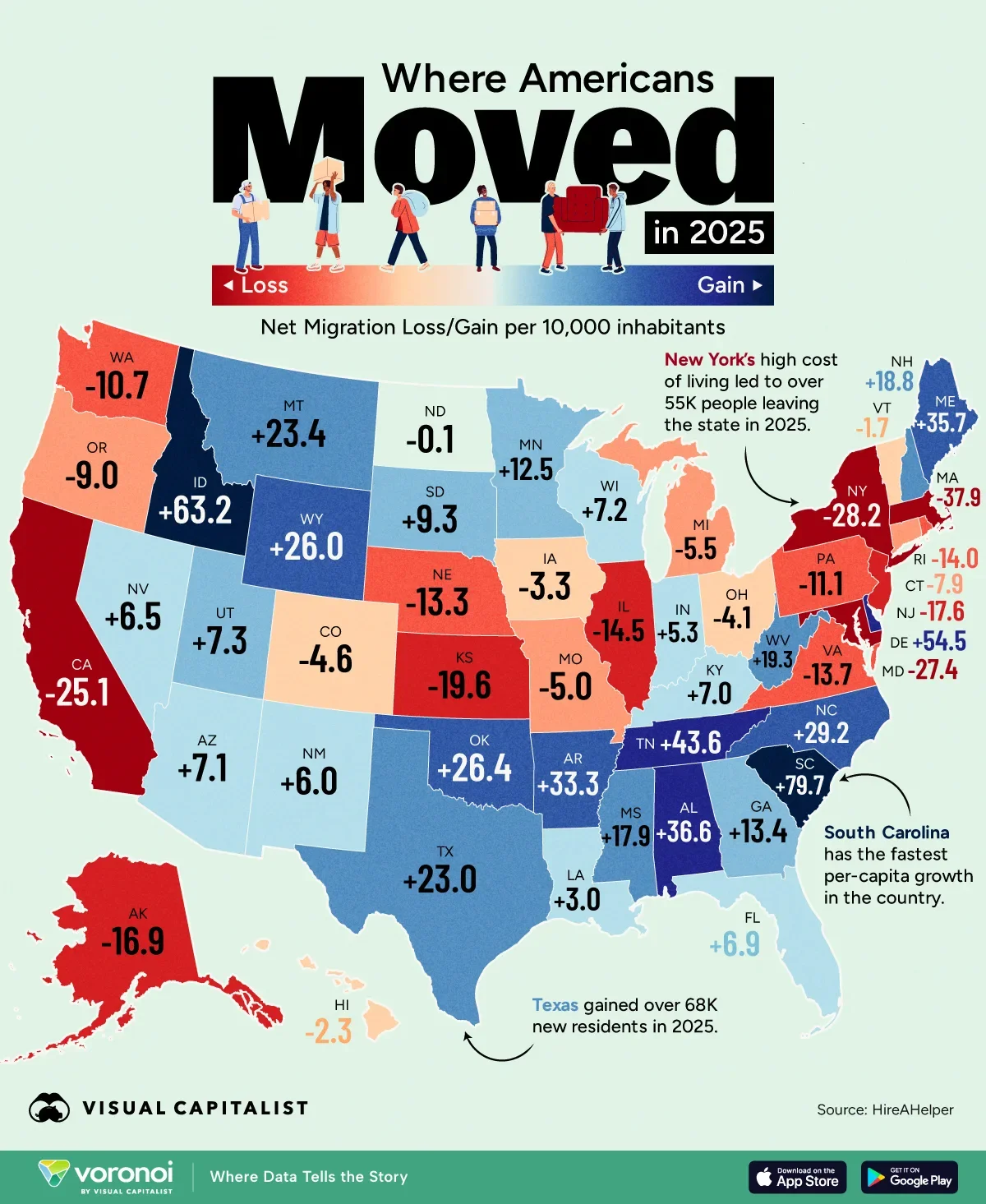
Recent migration data is reinforcing a trend we’ve been tracking for several years: population shifts are reshaping demand across key commercial real estate markets.
A new national map analyzing net migration per 10,000 residents highlights a clear pattern—continued movement toward the Southeast, parts of the Mountain West, and select Sunbelt markets, while high-cost coastal states continue to see outflows.
Key Migration Trends in 2025
Southeast markets are leading growth, with South Carolina, Tennessee, and Alabama ranking among the highest per-capita population gains
Texas continues to absorb the largest number of new residents overall, adding tens of thousands in 2025 alone
Mountain West states like Idaho and Wyoming remain top performers on a per-capita basis
Outflows persist in high-cost states, including California, New York, and Illinois
While this data is population-based, the implications for commercial real estate are immediate and measurable.
Why Migration Matters for CRE
Population growth is one of the most reliable leading indicators of real estate demand. As people relocate, they bring:
Increased need for office space and employment hubs
Higher demand for industrial and logistics facilities
Expansion of retail and service-oriented businesses
Pressure on infrastructure and mixed-use development
In short, where people go, capital and development follow.
The Southeast Advantage
The Southeast continues to benefit from a combination of structural advantages:
Lower cost of living relative to coastal markets
Business-friendly regulatory environments
Strong population inflows supporting long-term absorption
Availability of land for both residential and commercial development
Markets across Georgia, the Carolinas, and Tennessee are seeing sustained interest from both investors and occupiers looking to align with these trends.
What This Means for Investors and Occupiers
For investors, migration trends are a signal—not just of where growth is happening today, but where it is likely to persist.
Industrial assets in high-growth corridors remain a priority
Suburban office and flex space is gaining traction as companies follow workforce migration
Retail demand is stabilizing and expanding in growth markets with strong population inflow
Land and development opportunities are increasingly tied to migration-driven expansion patterns
For occupiers, relocation strategies are becoming more aligned with workforce accessibility and long-term cost control—both of which are directly influenced by migration patterns.
Looking Ahead
Migration is not a short-term anomaly—it is a structural shift. As cost pressures, lifestyle preferences, and remote work flexibility continue to influence decision-making, these patterns are expected to persist.
For commercial real estate stakeholders, understanding where people are going—and why—remains critical to making informed, forward-looking decisions.
Source: Visual Capitalist / U.S. Migration Data (2025)